
 Bradley Bryant
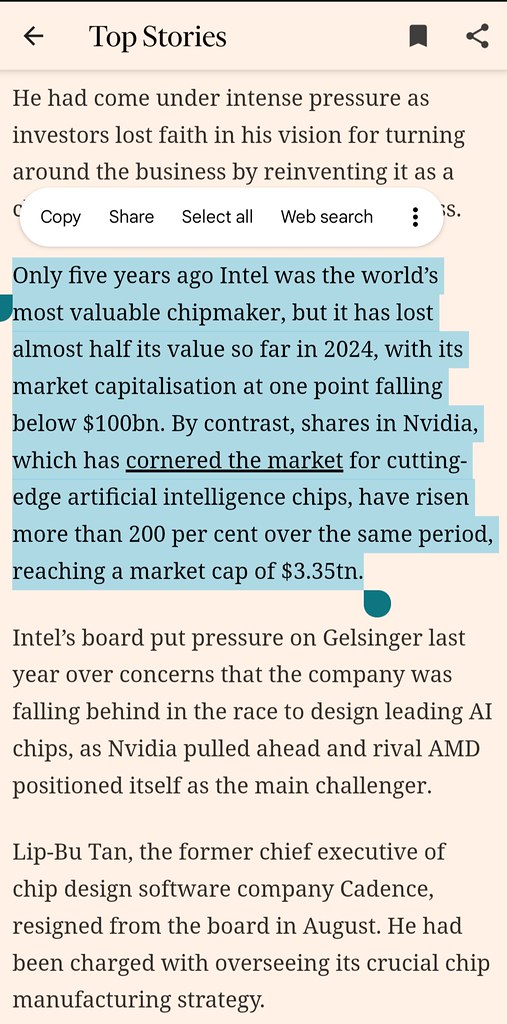
Nvidia shares fall following Huang’s return rally, reflecting investor concerns about future performance. The 6% drop has sparked discussions on market stability and investor confidence.
Understanding Nvidia’s Stock Movements
Nvidia shares fell by 6% recently, reflecting a significant shift in investor sentiment following the return of CEO Jensen Huang. This decline comes after a strong rally that had initially buoyed the stock price, showcasing the volatility inherent in the tech sector.
Several factors contribute to this sharp movement in Nvidia’s stock:
- Market Reactions: Investors often react quickly to leadership changes, and Huang’s return has sparked both optimism and uncertainty.
- Product Performance: As Nvidia continues to innovate in areas like AI and gaming, the performance of their latest products plays a crucial role in stock evaluations.
- Broader Economic Trends: External economic factors, including interest rates and market conditions, also influence Nvidia shares and investor confidence.
As the market adjusts, understanding these dynamics is essential for investors navigating Nvidia’s stock movements.
The Impact of Leadership Changes
The recent fall in Nvidia shares has raised questions about the implications of leadership changes, particularly the return of CEO Jensen Huang. Investors had initially responded positively to Huang’s return, anticipating a resurgence in innovation and growth. However, the recent decline of 6% suggests that confidence may be waning.
Several factors contribute to this shift in sentiment:
- Market Volatility: Ongoing fluctuations in the tech sector have created uncertainty around Nvidia’s future prospects.
- Competitive Landscape: Increased competition from rivals in the semiconductor industry is putting pressure on Nvidia’s market position.
- Supply Chain Challenges: Persistent supply chain issues could hinder Nvidia’s ability to meet demand.
As Nvidia shares fall, stakeholders are closely monitoring how these leadership dynamics will influence the company’s long-term strategy and performance.
Market Reactions to Earnings Reports
Nvidia shares fell by 6% following the recent earnings report, marking a significant shift in market sentiment. Analysts had anticipated a more favorable reaction after CEO Jensen Huang’s much-publicized return to the spotlight, but the results did not meet expectations.
Investors are now questioning the sustainability of the company’s growth trajectory in a competitive landscape. The following factors contributed to the decline:
- Disappointing Revenue Projections: The forecast for the upcoming quarter fell short of analyst predictions.
- Increased Competition: Rivals in the semiconductor industry are gaining ground, which has raised concerns among investors.
- Market Sentiment: Broader market trends have also influenced Nvidia shares, making investors more cautious.
The combination of these elements has led to a reevaluation of Nvidia’s market position, emphasizing the volatility that often accompanies earnings reports.
Investing Strategies During Volatility
Investors often find themselves navigating turbulent waters during periods of market volatility, such as the recent decline where Nvidia shares fell by 6% after a rally spurred by CEO Jensen Huang’s return. In such times, it’s crucial to adopt sound investing strategies to mitigate risks and capitalize on potential opportunities.
Here are some strategies to consider:
- Diversification: Spread investments across different sectors to reduce exposure to any single stock or industry.
- Dollar-Cost Averaging: Invest a fixed amount regularly, regardless of stock price, to lessen the impact of volatility.
- Focus on Fundamentals: Prioritize companies with strong balance sheets and solid earnings, which may weather downturns better.
- Stay Informed: Keep abreast of market trends and company news to make timely decisions.
Implementing these strategies can help investors manage their portfolios effectively during unpredictable market conditions.
Historical Performance of Nvidia Shares
Nvidia shares have demonstrated a volatile history, often reflecting broader market trends and company performance. Over the past year, the stock has experienced significant fluctuations, particularly during key earnings announcements and leadership transitions. Investors have noted that the company’s innovative advancements in AI and gaming have generally driven share prices higher, yet moments of uncertainty frequently lead to sharp declines.
Recently, Nvidia shares fell by 6% following the much-anticipated return of CEO Jensen Huang. This decline highlights the market’s reaction to leadership dynamics and investor sentiment. Analysts suggest that while Huang’s return initially sparked optimism, the subsequent drop indicates underlying concerns about future growth and competition.
In summary, the historical performance of Nvidia shares showcases a pattern where optimism can quickly turn to pessimism, as seen in the recent fall.
Expert Opinions on Current Trends
Market analysts have expressed concern over the recent trend of Nvidia shares fall, particularly after the rally surrounding CEO Jensen Huang’s return. According to industry experts, this dip may reflect broader uncertainties in the tech sector.
“While Huang’s leadership is often seen as a stabilizing force, investors are wary of potential overvaluation,” said Emily Johnson, a senior analyst at Tech Insights. “The market is recalibrating expectations in light of recent earnings.”
Additionally, financial strategist Mark Lee notes that “the volatility following Huang’s return is indicative of a larger trend in tech stocks, where rapid growth is often met with skepticism.”
Experts suggest that understanding these market dynamics is crucial for investors looking to navigate the current landscape. As the tech sector continues to evolve, keeping an eye on Nvidia’s performance will be essential.
Future Outlook for Nvidia
The recent decline in Nvidia shares has raised questions about the company’s future. Analysts are closely monitoring how the leadership dynamics will influence performance in the short and long term. Factors contributing to the current outlook include:
- Market Demand: The demand for AI and data center products remains strong, which could support a rebound.
- Competitive Landscape: Rivals are intensifying their efforts, posing challenges for Nvidia’s market share.
- Investor Sentiment: With shares falling, investor confidence may fluctuate, impacting future investments.
- Technological Advancements: Continued innovation is essential for Nvidia to maintain its leading position.
As Nvidia shares fall, the company’s response to these challenges will be critical in determining its trajectory moving forward.
Comparative Analysis with Competitors
Nvidia shares fall as investors reassess the company’s position in a competitive landscape dominated by major players like AMD and Intel. While Nvidia has long been considered a leader in graphics processing units (GPUs), the recent downturn raises questions about its market resilience.
Key comparisons highlight the following points:
- Market Capitalization: Despite Nvidia’s strong performance, AMD has been gaining ground, narrowing the gap in market value.
- Product Innovation: Both AMD and Intel are ramping up their R&D efforts, which may threaten Nvidia’s edge in technology.
- Sales Trends: Recent reports indicate that Nvidia’s sales growth is slowing, while competitors are witnessing a surge in demand for their products.
As investors digest these developments, the fall in Nvidia shares signals a pivotal moment in the ongoing battle for dominance in the semiconductor industry.
Nvidia shares fall as investors react to the implications of Huang’s return on the company’s future direction. Analysts are closely monitoring the market to assess how long Nvidia shares fall in response to these developments.
By dullhunk via Openverse